
Why the Highest Performing Specialty Care & MedTech Teams Are Led by Emotionally Intelligent Leaders, Not the Shiniest Resumes
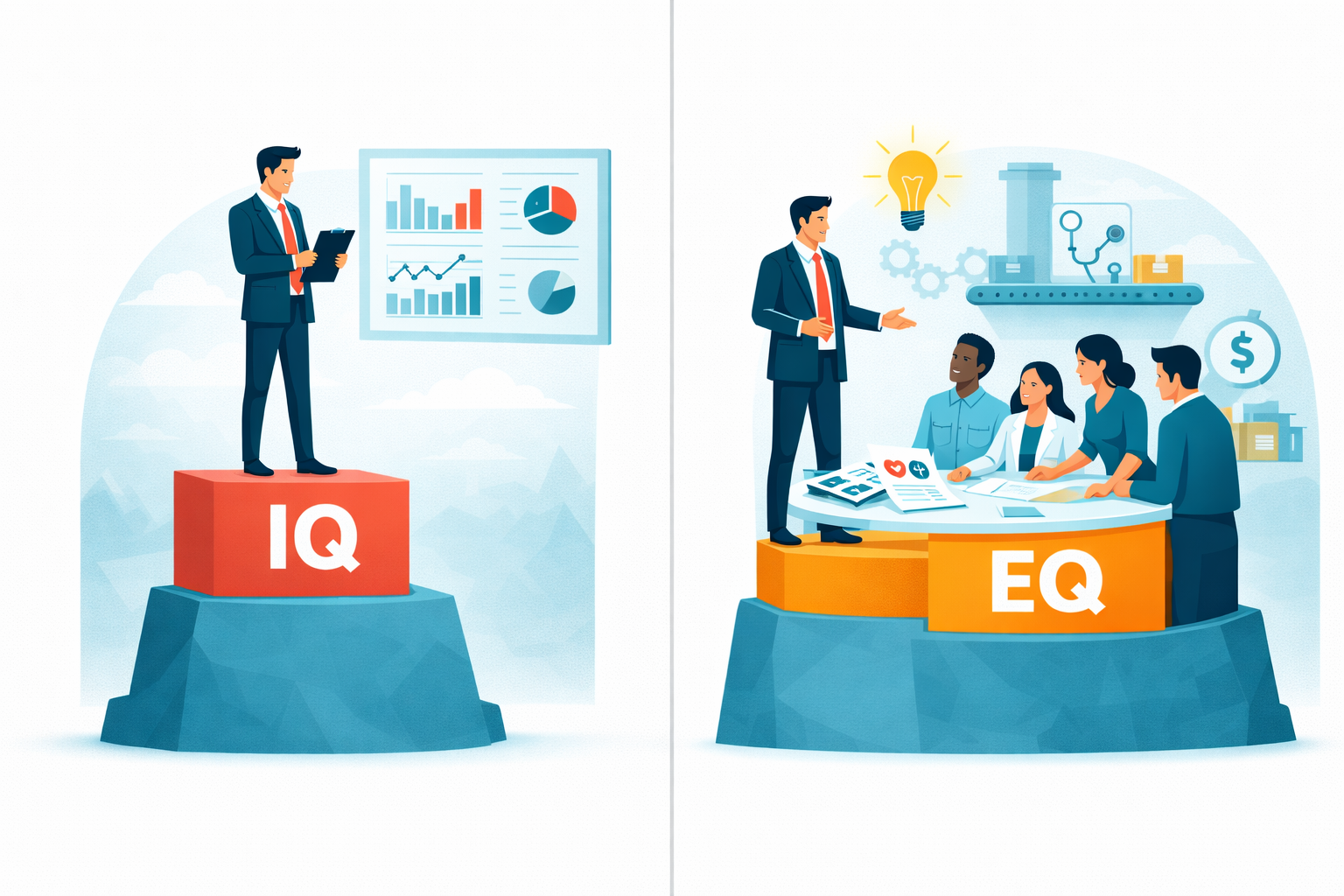
Most hiring conversations start the same way. A client walks me through what they need, and the description quickly turns into a list of skills. They want someone with these experiences in their vertical. A business development leader who has sold into their exact market. An operations executive who has scaled the same type of platform they are running. In other words, they are hiring for IQ. Technical ability does matter. Organizations need leaders who understand the work and the industry they are operating in.
After more than 30 years of hiring and placing executives in Specialty Care, MedTech, and Consumer companies, I have learned something that shows up again and again. IQ gets someone in the room. EQ determines whether they succeed once they are there.
The teams performing at the highest level today are usually led by people who combine strong IQ with high EQ. Those leaders retain their teams, navigate uncertainty well, and create environments where people execute consistently.
The pattern has been very clear. Leaders with strong emotional intelligence often outperform leaders who rely only on credentials or technical expertise. Yet many hiring processes still focus almost entirely on titles held, experience, and measurable results.
What matters just as much is how those results were achieved. That is the difference between someone who builds a strong organization and someone who simply manages through a period of performance.
Skills Will Get You a Candidate Pool. They Will Not Get You a Leader.
When I speak with candidates for the first time, many begin by listing their accomplishments. They walk through the companies they worked for, the roles they held, and the results they achieved. That information matters because it provides context for the conversation.
Then I shift the discussion and ask a different question. How did you achieve those results through your people? That is where the separation of IQ and EQ begins to appear.
Some candidates stay focused on the task. They describe the workflow they built, the process they implemented, or the systems they introduced. When I ask how their team engaged with that work, the answers often become less clear. I may hear something like, “We met weekly, aligned on the objectives, and made adjustments along the way.” That approach can produce results in the short term. It rarely builds a team that performs well through change or pressure.
Candidates with strong EQ describe their experience very differently. They talk about conversations with their R&D team that helped shape the direction of a project. They explain how they gave someone ownership of an initiative and watched that individual grow into the role. They often describe moments when someone on their team identified an issue in the market or suggested a different approach that improved the outcome.
Those stories show how an organization learns and adapts together. How the leader used their EQ in the process. Teams become stronger when leaders listen carefully, adjust direction when necessary, and allow people to contribute to the solution.
That is how resilient and high-growth organizations are built.
A Pretty Resume Is Not the Same as a Proven Leader.
One of my biggest frustrations in executive hiring today is the declining usefulness of resumes.
AI has made it very easy to produce polished documents that look impressive. The formatting is clean, and the language sounds sophisticated. Many resumes are using the same phrases and sentence structure with plug and play results. What is often missing is any real explanation of how the individual actually achieved results. Often, no mention of the team they led and the results they achieved together.
It becomes difficult to determine whether someone drove the outcome or simply worked inside a successful organization. Additionally, many talent acquisition teams are also under pressure to move quickly. Candidates are screened based on titles, company names, and a short list of required skills. Those profiles move forward to hiring managers who may focus on brand names, industry familiarity, or connections within their network.
None of those signals explains whether the individual can lead a team through a difficult execution challenge or business slump. Some of the strongest leaders I have placed came from successful, smaller companies. All they had was a limited group of people. They built results with limited resources, smaller budgets, and smaller teams. Success in those environments depends heavily on collaboration, trust, and strong communication with people. Those leaders develop deep awareness of how their teams operate because they have to.
When they move into larger organizations, they often become force multipliers. Working their people plan and using their EQ gets exponentially higher results.
In Specialty Care & MedTech, Everything Is a Connected Workflow. Your Leadership Should Reflect That.
Many organizations underestimate how interconnected their operations really are. In Specialty Care and MedTech, every function touches the next. Field operations influence physician adoption. Manufacturing affects supply and delivery. Revenue cycle impacts financial stability. The patient experience reflects how well those systems work together. From product development to physician use, practice operations, patient outcomes, and payment processing, every step depends on coordination across teams.
When leaders fail to build strong relationships across those groups, the workflow may look efficient on paper. The organization still struggles because people are not aligned in how the work actually gets done. Leaders who rely heavily on their IQ expertise sometimes answer for their teams rather than listening to them. Decisions are made using reports or historical data without input from the people closest to the work.
The workforce dynamic changes with every decade. Teams expect to be heard today. They want to understand the reasoning behind decisions and contribute their perspective from the field. Strategy without human connection eventually breaks down. In my own career, when there was a missed target or a business issue, there was likely an EQ issue rather than IQ. Sometimes, EQ with the customer, patient, or end user is missed, too.
When I evaluate candidates for leadership roles, I listen closely to how they describe working with their teams. Did they involve people in meaningful discussions about direction and priorities cross-functionally, too? Did they empower individuals to take ownership of important initiatives? Did they adapt their approach when new information surfaced by someone other than them?
The language leaders use reveals a great deal about how they actually operate. “I” versus “they” are often tell-tale words.
IQ Might Come Up With the Idea. EQ Puts the Reality to It.
IQ plays a very important role in leadership. It helps define strategy, shape product roadmaps, and establish growth targets. A strategy on paper represents potential. The real challenge is execution.
Whether a leader oversees one hundred employees or one hundred thousand, the strength of the plan depends on the people responsible for carrying it forward. Many strategies struggle because leaders focus heavily on the logic of the plan while overlooking the human element required to deliver it.
The strongest Specialty Care and MedTech teams I have worked with are led by individuals who recognize that their workforce drives execution. They communicate clearly, listen carefully, and remain closely connected to what their teams are experiencing.
When challenges arise, they step closer to the work and listen to the people closest to the problem. The next time you evaluate candidates for a leadership role, pay close attention to how they describe their teams and the role those teams played in achieving results.
Leaders who understand how people contribute to execution, use EQ, and build organizations that outperform consistently over time.
Question: Is EQ part of your hiring decisions or just IQ?
About the Author
Laura Klein is an executive search partner specializing in Specialty Care and MedTech leadership roles. A former healthcare & consumer C-suite leader, she spent more than 30 years leading teams, owning P&Ls, and making the hiring decisions that shaped organizational performance before moving into executive search. She leads her firm out of GRN Plano Executive Search in the Dallas/Fort Worth area, where she is probably asking a candidate right now to tell her about a time they failed. You can reach Laura at lklein@grnplano.com or through the website at grnplanoexecsearch.com.